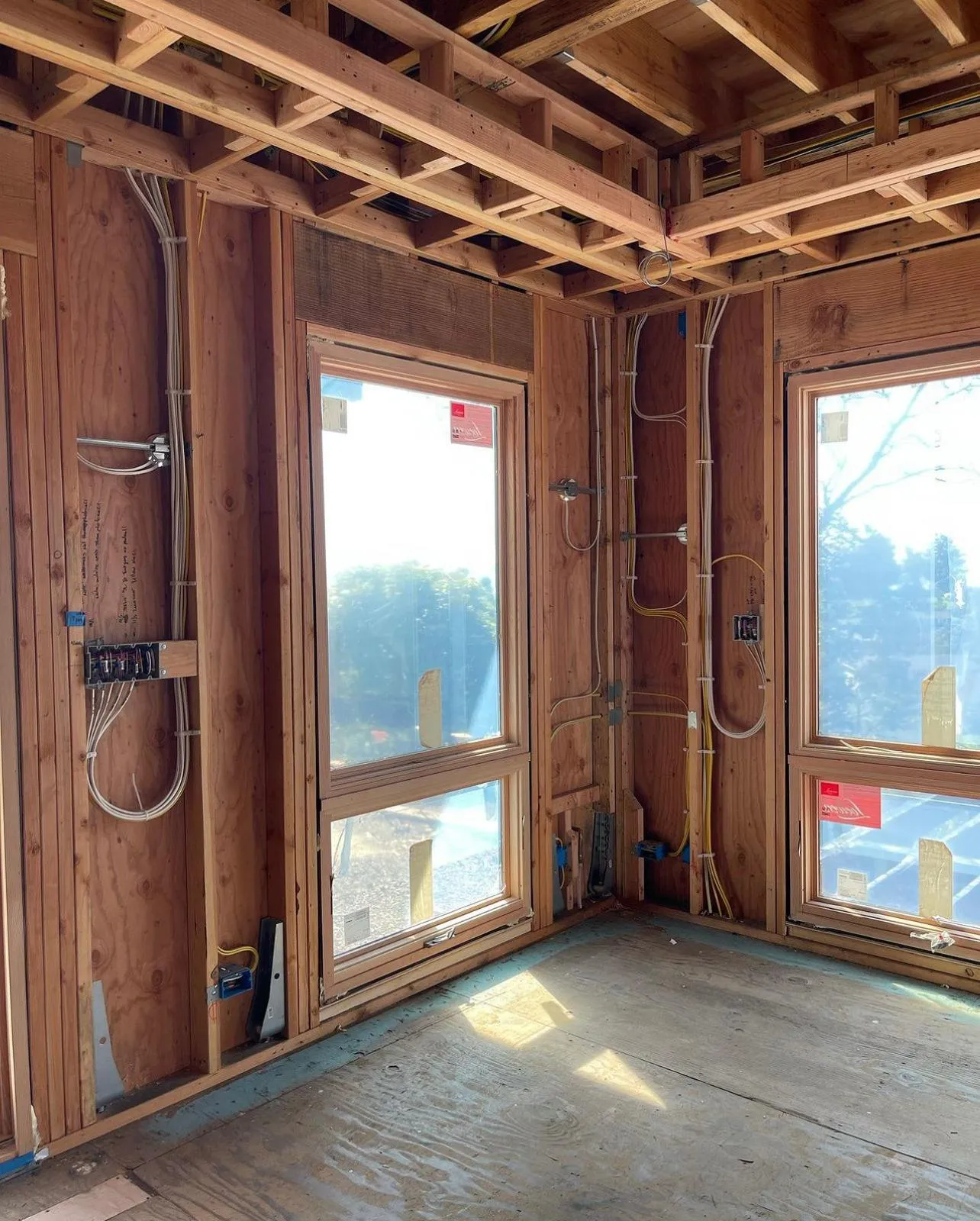
If your home in La Mesa, Lemon Grove, Spring Valley, or older parts of El Cajon was built between 1965 and 1973, there’s a real possibility the branch circuits are aluminum, and the connections behind your outlets and switches are slowly deteriorating.
This isn’t theoretical. The Consumer Product Safety Commission documented that aluminum-wired homes are 55 times more likely to reach “fire-hazard conditions” at connections than copper-wired ones. The metal itself isn’t the problem. The connections are.
Why your 1965-1973 home probably has aluminum branch circuits
Between 1965 and 1973, copper prices spiked. Builders nationwide switched to aluminum branch wiring (the wire running from your panel to your outlets and switches) because it cost about a third as much. By 1972 the industry started understanding the connection-failure problem and gradually moved back to copper, but by then millions of homes had aluminum installed.
In San Diego County, the housing stock that’s most likely affected:
- La Mesa Village + College Area: heavy 1960s-70s build-out
- Lemon Grove + Spring Valley: same era, large tracts
- Older parts of El Cajon: Bostonia and east of Magnolia
- Some North Park / South Park: but smaller share, mixed era
If your home is from this window, assume aluminum until proven otherwise.
Why aluminum is a fire risk in branch wiring
Three properties of aluminum cause connection failures over time:
1. Oxidation. When aluminum is exposed to air, it forms aluminum oxide, a non-conductive layer that increases resistance at connections. Copper oxide is conductive; aluminum oxide is not. Resistance generates heat under load.
2. Thermal expansion. Aluminum expands and contracts more than copper as it heats and cools. Under repeated load cycles (an AC compressor cycling on and off, an electric stove element heating up), aluminum connections gradually loosen against the screw or terminal that holds them.
3. Galvanic corrosion. When aluminum touches dissimilar metals (the brass screw of an outlet, the steel of a junction box), micro-currents accelerate corrosion at the contact point.
The result: a connection that started tight in 1968 is, in 2026, loose and oxidized. Under load it can hit 200°F+ and char the insulation, the receptacle housing, or the wood around the box. That’s where fires start.
How to identify aluminum wiring in your home
You can check yourself in 5 minutes without opening any walls:
1. Pull a single outlet cover (turn off the breaker first). Look at the wires going to the receptacle’s screws.
- Silver/gray, slightly dull metal = likely aluminum
- Reddish/orange metal = copper
2. Check the cable jacket if you can see exposed wiring (basement, attic, garage). Cable manufactured for aluminum branch wiring is often labeled “AL” or “ALUMINUM” along the jacket. Romex with copper conductors says “Cu” or has no metal label.
3. Look at your panel. Open the panel cover (the outer cover, not the dead-front behind the breakers; that’s electrician territory). Wires going to breaker terminals: same color test. Aluminum service entrance is normal and fine; aluminum branch circuits are the concern.
4. Check breakers. If breakers are stamped “CU/AL” or “CO/ALR” they were rated for use with aluminum. If the panel is full of these, the original installer was working with aluminum. Modern breakers without this stamp may not be safe with aluminum branch circuits.
If you find aluminum, don’t panic, but don’t ignore it. Get a licensed electrician to do a thorough inspection.
Three remediation options (ranked by cost and effectiveness)
Option 1: COPALUM crimp connectors (most thorough)
A COPALUM crimp uses a special tool to permanently bond a copper “pigtail” to the aluminum conductor at every junction (outlets, switches, junction boxes, the panel). The remaining connections in the device are copper-to-copper, eliminating the failure mode.
- Cost: $50 to $80 per connection. A typical 2,000 sq ft home has 75 to 150 connections = $4,000 to $12,000.
- Effectiveness: Highest. CPSC-recognized as a permanent fix.
- Downside: Only certified technicians with the AMP/Tyco tool can do it. We work with certified subs when needed.
Option 2: AlumiConn lever-nut connectors (good middle ground)
AlumiConn is a screw-down connector specifically rated for aluminum-to-copper joins. Cheaper than COPALUM, faster to install, but the connection is still mechanical (not crimped) so the long-term reliability is debated.
- Cost: $20 to $35 per connection = $1,500 to $5,000 for a typical home.
- Effectiveness: Good. UL-listed for aluminum-to-copper. Less certain than COPALUM long-term.
- Best for: Homeowners who want to address the risk without the full COPALUM cost.
Option 3: Whole-home rewire (most disruptive but cleanest)
Replace every aluminum branch circuit with new copper. This is what you do during a major renovation anyway, and it eliminates aluminum from the equation entirely.
- Cost: $8,000 to $25,000 depending on home size and finished-wall complexity.
- Effectiveness: 100%. No aluminum left.
- Best for: Homes already getting renovated, or homes where aluminum has caused multiple device failures (outlets that smell warm, switches that spark).
We’ve also written about this in our panel upgrade cost guide. Sometimes a panel upgrade is the right time to handle aluminum branch circuits at the same time, since the panel is already open.
Cost ranges by home size
| Home size | COPALUM (most thorough) | AlumiConn (middle) | Full rewire |
|---|---|---|---|
| 1,000 to 1,500 sq ft | $3,000 to $6,000 | $1,200 to $2,500 | $7,000 to $12,000 |
| 1,500 to 2,500 sq ft | $5,000 to $9,000 | $2,000 to $4,000 | $10,000 to $18,000 |
| 2,500+ sq ft | $7,000 to $12,000 | $3,000 to $6,000 | $15,000 to $30,000 |
Insurance implications
Several California insurance carriers (State Farm, Mercury, Allstate) now flag aluminum branch wiring during policy underwriting. Homeowners we’ve worked with received non-renewal notices specifically tied to aluminum wiring in their last few years. Documented COPALUM or AlumiConn remediation often satisfies the carrier; you’ll need an electrician’s letter on file.
If you’re getting an insurance review or a buyer’s inspection, get the remediation done before. It’s cheaper to handle proactively than scramble during a sale or under a 60-day non-renewal clock. Same logic applies if you’re seeing the signs of an overloaded panel on top of the aluminum issue: bundle the work.
Why Martinez Electric for aluminum remediation
Aluminum branch wiring is one of the most common issues we deal with in older La Mesa, Spring Valley, and Lemon Grove homes. We do the inspection, the load assessment, and either the AlumiConn pigtailing ourselves or coordinate with COPALUM-certified specialists when that’s the right answer. CSLB licensed (#1052901), every job permitted and inspected.
Concerned about your home’s wiring? Get a free assessment or call (619) 249-0956. We’ll do an outlet-and-panel check and tell you within an hour whether you have aluminum and what your options look like.